

Not All Bergamot Is Created Equal
Citrus bergamot has attracted attention for its potential to support healthy cholesterol, triglycerides, and metabolic wellness. But as interest has grown, so has a flood of generic supplements borrowing the language of clinical research without demonstrating that their ingredients match the extracts actually studied.
A bergamot label is not proof of polyphenols. A 25:1 ratio is not proof of potency. And generic bergamot is not automatically clinically studied bergamot.
At NAOMI Wellness, we believe consumers deserve measurable active compounds, documented sourcing, and science relevant to the ingredient in the bottle—not just impressive marketing.
The Seven Polyphenols That Matter
Bergamot research centers on its distinctive polyphenol composition. Seven compounds are particularly important: neoeriocitrin, naringin, neohesperidin, brutieridin, melitidin, luteolin, and apigenin. These flavonoids and related compounds are studied for antioxidant activity and pathways involved in lipid and metabolic health.
Human studies of specific standardized bergamot preparations have reported favorable changes in LDL cholesterol, HDL cholesterol, triglycerides, and selected metabolic markers. Some research has assessed changes within approximately 30 days. Results depend on the extract, dose, and population studied; findings from one formulation cannot automatically be transferred to another.
The science is about defined extracts—not every product that happens to say “bergamot.”
5:1 and 25:1: Big Numbers. No Polyphenol Proof.
Generic bergamot products often promote 5:1, 10:1, or 25:1 extract ratios. These figures generally describe how much starting botanical material was used relative to the resulting extract. They do not establish the concentration of the seven key polyphenols, confirm Calabrian origin, or demonstrate clinical equivalence.
STOP BUYING THE RATIO. START DEMANDING THE POLYPHENOLS.
A manufacturer that uses a dramatic ratio to imply the benefits of clinically studied bergamot—without verified polyphenol testing or evidence connecting its extract to the research—has not substantiated that implication. An unverified ratio is a marketing claim, not a scientific standard.
We Tested Competing Bergamot. The Findings Raise Serious Questions.
In an investigation conducted with our ingredient supplier, selected competing bergamot supplements were submitted for independent laboratory analysis. As reported in our published investigation, the samples returned non-detectable findings for the seven key polyphenols evaluated.
“Non-detectable” means the compounds were not identified above the laboratory method’s applicable detection or reporting thresholds; it does not prove an absolute zero concentration. The findings concern the tested samples, not every product in the market.
But the question is unavoidable: If the key polyphenols cannot be detected in a tested product, what evidence connects it to the clinical research used to market bergamot?
Read the investigation: https://naomiw.com/blogs/articles/they-dont-want-you-to-see-these-lab-results
Third-Party Tested? Tested for What?
“Third-party tested” can sound reassuring—but it is incomplete without knowing what the lab measured. Purity testing may assess contaminants such as heavy metals and microbes. Potency testing measures whether specified active compounds are actually present at the expected levels.
A supplement may meet contaminant specifications without demonstrating that it contains meaningful amounts of the polyphenols consumers are paying for. Ask whether the seven key compounds were measured, whether the extract has a disclosed standardization, and whether the company can substantiate its claims.
PURITY MATTERS. POTENCY MATTERS. PROOF MATTERS.
Why Authentic Calabrian Sourcing Matters
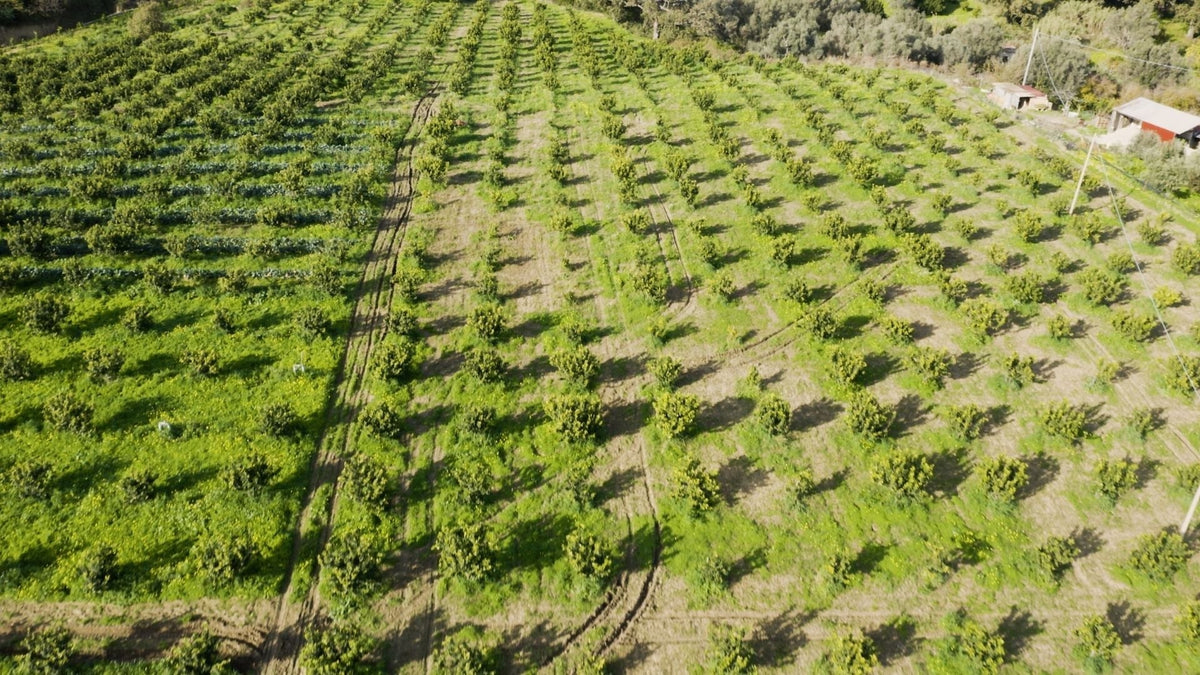
Reggio Calabria, Italy, is renowned for its bergamot cultivation and is closely associated with the ingredient’s scientific and agricultural history. Botanical origin, harvesting, and extraction can influence chemical composition. A generic bergamot label—or a 25:1 ratio—does not establish where the fruit was grown.
If a company claims Calabrian origin, it should be able to prove it. If it claims clinical relevance, it should be able to document the ingredient profile behind that claim.
Five Questions Before You Buy Bergamot
• Is the polyphenol content standardized and verified?
• Are the seven key polyphenols identified and measured?
• Can the manufacturer substantiate Reggio Calabria sourcing?
• Does testing assess potency as well as purity?
• Is the human research relevant to the actual extract being sold?
The NAOMI Difference: Why BergAmore®
We selected BergAmore® because quality should be measurable—not assumed. Our patented, full-spectrum extract is standardized to a minimum 38% Bergamot Polyphenolic Fraction, features a defined seven-polyphenol profile, and is sourced from Reggio Calabria, Italy, with an authenticity verification program. Its positioning is grounded in research relevant to the standardized ingredient.
BergAmore® has also received recognition from Italy’s Accademia del Bergamotto. These are meaningful points of differentiation from generic products that provide no verified polyphenol specification or traceable origin.
REAL SCIENCE. REAL INGREDIENTS. REAL TRACEABILITY.
The Bottom Line
Consumers should not have to take potency on faith. A flashy ratio cannot replace verified polyphenols. A generic label cannot establish Calabrian authenticity. And research on one standardized extract cannot validate an unrelated product.
DON’T SETTLE FOR BORROWED SCIENCE. DEMAND THE REAL THING.
BERGAMORE® BY NAOMI — RESULTS MATTER.

 Hassle-Free 90 Day Returns